
The 2026 Reality: 70% of new business applications are now built using Low-Code/No-Code tools. However, as these businesses scale, many find that the “easy” path becomes a “costly trap.” In 2026, the question isn’t whether No-Code is good—it’s whether it’s still right for you.
Table of Contents
- The “No-Code Ceiling”: What is it?
- Is my business outgrowing its current software? (5 Warning Signs)
- The Hidden Cost Problem: Why “Cheap” Tools get Expensive
- Custom Code: Why “Built-from-Scratch” Wins at Scale
- The Migration Roadmap: Moving from Template to Custom
- Verdict: When to stay and when to go?
<a name=”ceiling”></a>
1. What is the “No-Code Ceiling”?
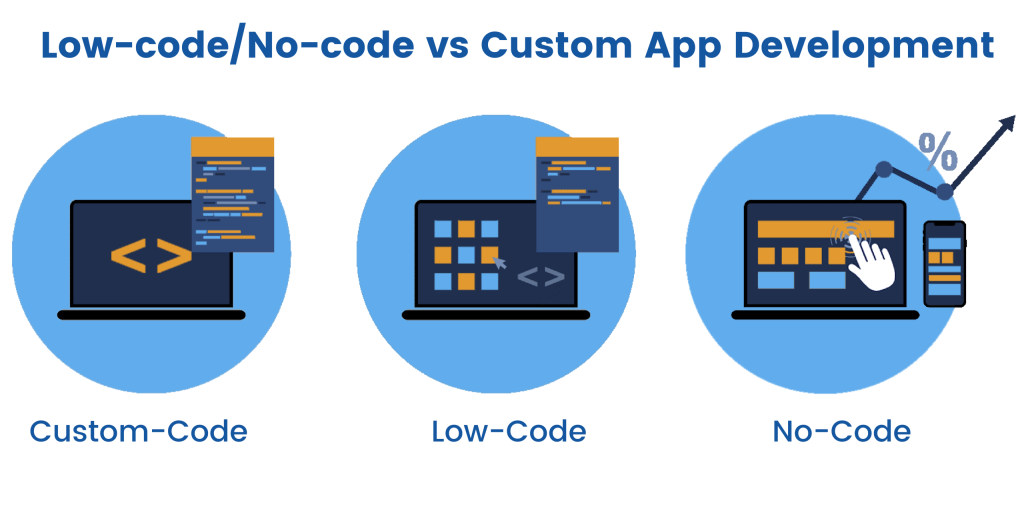
The No-Code Ceiling is the point where a platform’s pre-built features can no longer meet your business’s unique logic or scaling needs.
Imagine trying to build a 50-story skyscraper on a foundation meant for a 2-story house. Templates are the “pre-fab” houses of the software world—great for a quick start, but they cannot be easily expanded into a complex enterprise. In 2026, hitting this ceiling doesn’t just slow you down; it stops your innovation.
<a name=”signs”></a>
2. Is my business outgrowing its current software?
If you find yourself saying “I wish the app could do this, but the platform doesn’t allow it,” you’ve already hit the ceiling. Here are the 5 signs:
- The “Workaround” Mess: You are using 5 different third-party tools (like Zapier or Make) just to get your data from Point A to Point B.
- The Performance Lag: As you hit 10,000+ records or users, the app takes 10 seconds to load.
- Security Red Flags: You need specific data residency or encryption that your “standard” platform doesn’t support.
- The Rigid UI: You want a specific user experience to match your brand, but you’re stuck with “Standard Button A” and “Template Layout B.”
- Feature Roadblocks: You need an AI integration or a specific API connection that the platform’s “Marketplace” doesn’t offer.
<a name=”costs”></a>
3. Why do “Cheap” tools get expensive at scale?
Business owners often choose No-Code to save money. But in 2026, the pricing models of these platforms can become a “Scaling Tax.”
- Per-User Fees: A platform might be $20/month for 5 users. But when you grow to 100 users, you’re paying **$2,000 every month.** Over 3 years, that’s $72,000—more than the cost of building your own software.
- Hidden Transaction Costs: Many platforms take a percentage of your sales or charge for every “task” run.
- The “Lock-In” Cost: If the platform raises its prices (as many did in 2025), you are trapped because migrating your data out is technically difficult and expensive.
<a name=”custom-wins”></a>
4. Custom Code: Why “Built-from-Scratch” Wins at Scale
In 2026, Custom Software Development isn’t just about coding; it’s about Asset Ownership.
| Feature | Low-Code/Templates | Custom Software |
| Ownership | You rent it (Monthly fees) | You own the IP (One-time investment) |
| Scalability | Limited by platform tier | Limitless (scales with your servers) |
| Security | Shared “Public” environment | Private, hardened, and compliant |
| Integration | Standard connectors only | Connects to anything with an API |
<a name=”roadmap”></a>
5. The Migration Roadmap: Moving from Template to Custom
You don’t have to shut down your business to upgrade your software. A professional team follows a “Parallel Migration” strategy:
- Discovery: Audit your current no-code workflows.
- Database Mirroring: Move your data to a secure, independent database (like PostgreSQL).
- Modular Rebuilding: Build the most critical features in custom code first.
- The “Switchover”: Once the custom app is tested, you move your users over seamlessly.
<a name=”verdict”></a>
6. The Verdict: When to stay and when to go?
- Stay with Templates if: You are still validating your idea, have fewer than 20 users, and your workflows are standard.
- Move to Custom if: Your software is your competitive advantage, you are scaling past 50 users, or your monthly platform fees are exceeding $500.
Is your business outgrowing its current tools?
At Eduglar, we specialize in helping businesses break through the “No-Code Ceiling.” We don’t just build software; we build foundations that can support your growth for the next decade.
[Explore our Custom Software Development services] | [Request a Free Migration Consultation] In 2026, the developer’s role is shifting.1Writing syntax is no longer the bottleneck; the new challenge is orchestration.2 This blog is designed to help your readers understand why they need to stop thinking about “lines of code” and start thinking about “agentic workflows.”