
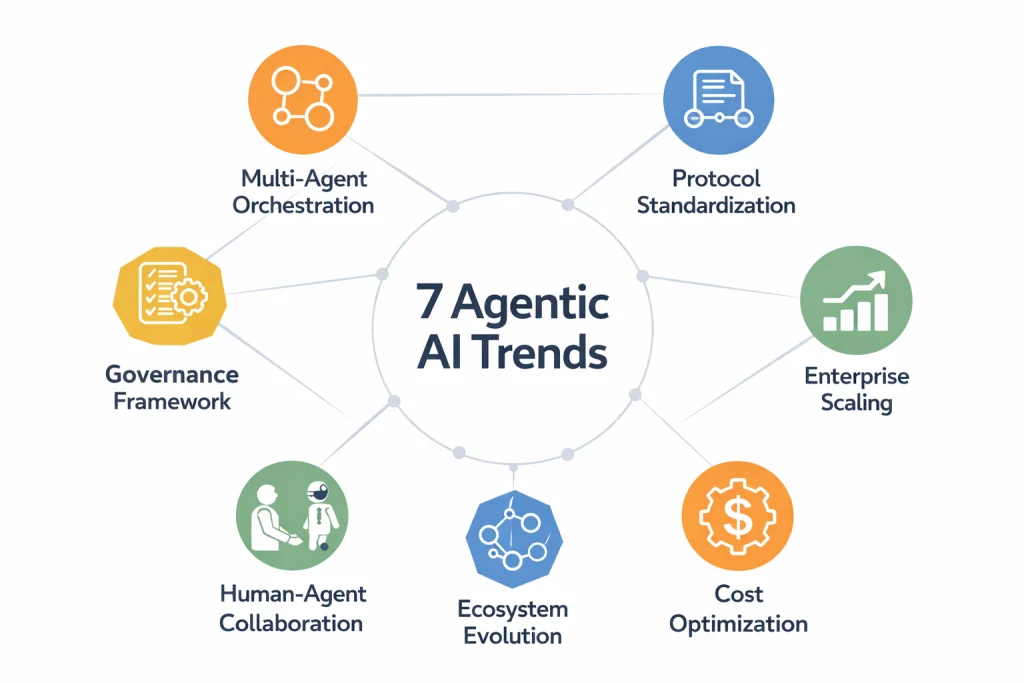
The Shift: In 2024, we asked AI to “write a function.” In 2026, we ask AI to “build a feature, test it, and deploy it.” As standard coding becomes automated, the highest-paid developers are no longer just “coders”—they are AI Orchestrators.
Table of Contents
- The “Syntax Trap”: Why coding is no longer enough
- What is AI Orchestration? (The 2026 Definition)
- The “Logic Conductor”: Moving from Scripts to Workflows
- Mastering the Stack: Key Frameworks (CrewAI, LangGraph, AutoGen)
- Future-Proofing: How to transition from Developer to Orchestrator
- The Eduglar Workshop: Master Agentic Systems
<a name=”syntax-trap”></a>
1. The “Syntax Trap”: Why is coding no longer enough?
By early 2026, AI coding assistants (like GitHub Copilot 5.0 and specialized LLMs) handle nearly 80% of boilerplate code generation. If your primary value is knowing the syntax of a specific language, you are competing with a machine that never sleeps.
- The Problem: Developers are getting “stuck” because they can generate code fast, but they can’t manage the complex interactions between multiple AI agents.
- The Reality: Companies in 2026 are hiring for System Architecture and Orchestration, not just raw typing speed.
<a name=”what-is-orchestration”></a>
2. What is AI Orchestration?
AI Orchestration is the coordination of multiple specialized AI agents, tools, and data sources to complete a high-level goal.3
- Coding: Writing the instructions for a single task.
- Orchestration: Setting the “rules of engagement” for an entire digital workforce.
Think of it as the difference between being a violinist (skilled in one instrument) and being the conductor (ensuring the entire orchestra plays in harmony).4
<a name=”workflow-design”></a>
3. The “Logic Conductor”: Moving from Scripts to Workflows
In the past, you wrote linear scripts: Step 1 → Step 2 → Step 3. In 2026, you design Agentic Workflows. These are dynamic, loop-based processes where agents can “decide” their next move based on context.
Example of an Orchestrated Workflow:
- Agent A (Analyst): Researches the requirements from a client’s messy document.
- Agent B (Architect): Designs the database schema based on Agent A’s report.
- Agent C (Coder): Generates the Python code.
- Agent D (Reviewer): Finds bugs and sends the code back to Agent C if it fails tests.
The Orchestrator’s Job: You design the logic that allows Agent D to talk back to Agent C without human intervention.

<a name=”frameworks”></a>
4. Mastering the 2026 Stack
To be an orchestrator, you must move beyond basic IDEs and learn the frameworks that “glue” agents together.
| Framework | Best For | Key Philosophy |
| LangGraph | High Control | Directed Acyclic Graphs (DAGs) for precise logic. |
| CrewAI | Role-Based Teams | “Crews” of agents with specific personas (Manager, Writer, Dev). |
| Microsoft AutoGen | Multi-Agent Conversations | Allows agents to “chat” with each other to solve problems. |
| Semantic Kernel | Enterprise Integration | Merges LLM logic with traditional C# or Python apps. |
<a name=”transition”></a>
5. How to transition from Developer to Orchestrator
To stay relevant in the 2026 job market, your learning path should look like this:
- Focus on Prompt Engineering as Logic: Treat prompts as structured “state machines,” not just text.5
- Study Multi-Agent Design: Learn how to prevent agents from “hallucinating” or getting stuck in infinite loops.
- Master Observability: Use tools like LangSmith or Arize to monitor what your agents are doing in real-time.
<a name=”workshop”></a>
6. Take the Leap: The Eduglar AI-Powered Development Workshop
Don’t wait for your skills to become obsolete. At Eduglar, we’ve designed an advanced bootcamp for developers who want to lead the AI revolution.
In this workshop, you will:
- Build a Multi-Agent Crew that automates a full software release.
- Learn to use LangGraph to create complex, self-healing workflows.6
- Receive a Certified AI Orchestrator credential (validated for the 2026 market).
[Register for our Next Workshop]