

Target Audience: Students, Job Seekers, and Worried Parents
Look around. It’s 2026. We have AI agents that can write a functional React component in 10 seconds. We have tools that debug entire databases with one prompt. If you are still learning “how to print a star pattern in C++” and thinking that’s enough to get a ₹10 LPA job, you are in for a massive shock.
But is coding dead? Absolutely not. It has just evolved.
Table of Contents
- The 2026 Reality Check: What actually died?
- The “Junior Developer” Trap: Why companies stopped hiring “Syntax-Wrappers.”
- The Human Advantage: 3 things AI still sucks at.
- The “Survival Stack”: What you must learn to stay employable.
- From Coder to Architect: How Eduglar prepares you for the “Agentic” Era.
- Verdict: Should you still start a career in IT?
1. The 2026 Reality Check: What actually died?
The era of the “Syntax-Wrapper” is over.
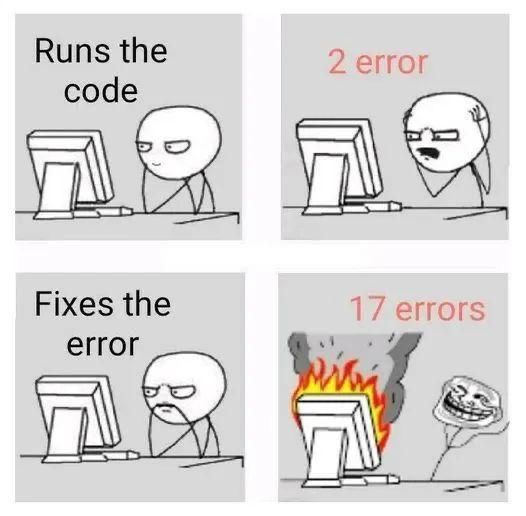
If your only skill is knowing where the semicolon goes or memorizing Python syntax, you are competing with an AI that does it for free, faster, and without coffee breaks. What died isn’t “Coding”; it’s “Low-Value Implementation.” Companies no longer want to pay someone to write boilerplate code. They want someone who can tell the AI what to build and how to ensure it doesn’t crash the server.
2. The “Junior Developer” Trap
Two years ago, a Junior Dev could get hired just by knowing basic HTML, CSS, and JS. Today? That role doesn’t exist.
- The Old Way: Spend 4 hours writing a CSS layout.
- The 2026 Way: Spend 5 minutes prompting an AI to generate the layout, and 3 hours ensuring it is accessible, SEO-friendly, and integrates with the backend API.
The Conclusion: If you aren’t faster than the AI at the “thinking” part, you are replaceable.
3. The Human Advantage: 3 things AI still sucks at
AI is a “Super-Fast Intern,” but it isn’t a “Manager.” Here is where you win:
- System Architecture: AI can write a function, but it can’t design a scalable system for 1 million users in Kanpur without making expensive mistakes.
- Security & Logic: AI often hallucinates security flaws. A human engineer is the “Gatekeeper” who ensures the code is safe from hackers.
- Business Empathy: An AI doesn’t understand why a client wants a specific feature. It doesn’t understand the “Sahi Quality, Sahi Daam” philosophy. Humans do.
4. The “Survival Stack”: Your 2026 Roadmap
Stop following 2020 roadmaps. Here is what the industry demands right now:
| Skill Category | Outdated (Don’t waste too much time) | Essential (Master these now) |
| Programming | Basic Syntax / Competitive Coding | TypeScript, Rust, System Design |
| Web Dev | Plain React / Basic HTML | Next.js 15+, Server Components, AI Integration |
| Tools | Just VS Code | GitHub Copilot, Cursor, Docker, Kubernetes |
| Logic | Memorizing Algorithms | Prompt Engineering & AI Agent Orchestration |
5. From Coder to Architect: The Eduglar Edge
At Eduglar, we realized early on that teaching just “Java” or “Python” is a disservice to our students.
Our AIGC Pro and MAD Pro certifications are built on the “Human + AI” model. We don’t just teach you how to write code; we teach you how to architect solutions.
- We use AI as a tool, not a crutch.
- We focus on Project-Based Learning (Real apps, not just “To-Do” lists).
- We provide Mentorship that helps you navigate the high-pressure IT industry in Kanpur and beyond.
6. Verdict: Should you still start a career in IT?
YES. But only if you are willing to be more than a “Coder.”
The demand for Software Architects, AI Engineers, and Full-Stack Managers is higher than ever. The salaries haven’t dropped; they have shifted to those who can manage the “Digital Symphony” of code and AI.
💬We want to hear from YOU!
Are you scared that AI will replace your dream job, or are you excited to use it as your superpower? Drop a comment below with your biggest fear about the IT industry—we are replying to every single one!